Security That Holds.
Under Real Pressure.
Most security programs are built to look impressive. YUZANA is built to work — when the stakes are highest, the threat is real, and the margin for error is zero.
Built for public-sector and critical-infrastructure leaders: cities, ports, airports, transit, utilities, and law enforcement — and for the organizations carrying that risk without a seated CISO.
The Readiness Horizon
Los Angeles is hosting three of the largest events on earth inside twenty-four months. Timothy Lee has been inside the cyber readiness planning for all three.
Delivered · Summer 2026
FIFA World Cup 26
Multi-agency cyber coordination across venue, transit, and civic systems.
Feb 14, 2027 · SoFi Stadium
Super Bowl LXI
Readiness windows are closing now. Planning cycles run 12–18 months, not 12–18 weeks.
July 2028
LA28 Olympic Games
The largest coordinated critical-infrastructure exposure in modern US civic history.
Major events do not create new vulnerabilities. They remove the option of postponing the ones you already have. Every dependency, every unowned system, every handoff between agencies becomes load-bearing on a fixed date that will not move.
Security events per day at the City of LA's Integrated SOC, under his direction
City departments secured under a single citywide program
National firsts founded — maritime CSOC and city-led cyber lab
Largest city in the United States, secured as its CISO
Public accountability.
Operational consequence.
YUZANA works with organizations where a security failure is a public event — where the mission cannot pause and the decision-makers answer to more than a board.
A peer with the same scars to pressure-test strategy against — no vendor incentive, no seat to protect.
Security ownership without a security background, and a board asking questions that need real answers.
Between leaders, or not yet at the scale to seat one — but already at the scale to be targeted.
A control baseline that has to be defensible, and a governance function that has to survive the assessment.
“Complexity is the hiding place of failure.”
Fewer tools. Less noise. Total confidence. YUZANA exists to restore clarity to leaders responsible for complex, high-stakes environments.
Start a ConversationFour ways YUZANA is brought in.
YUZANA does not sell products or predefined playbooks. Every engagement is led by the principal, and scoped to the decision the organization actually has to make.
The Retainer
For leaders who need a senior second opinion with no vendor incentive behind it.
An extension of your leadership team — advising CISOs, CIOs, executives, and boards on strategy, prioritization, and long-term direction. Security strategy and risk prioritization · governance and executive decision support · vendor and tool rationalization · board-level alignment.
The Blueprint
For organizations moving from manual response to resilient, repeatable operations.
The operational security blueprint — SOC modernization and automation strategy, critical infrastructure and mission-critical asset protection, and major-event and special-operations readiness. YUZANA delivers architecture and direction; your teams or partners execute.
The Baseline
For programs that need a defensible control baseline — and a governance function that still runs after the assessment ends.
Security control assessment and baselining against NIST SP 800-53 Rev. 5 and NIST CSF 2.0 · system categorization under FIPS 199 · GRC platform implementation and operationalization · continuous compliance and evidence discipline. Structured in gated phases, so the organization can stop, redirect, or expand at each gate rather than committing to the whole program on day one.
The Bridge
For leaders who have to explain technical risk to people who do not speak it.
Translating threats, vulnerabilities, and incidents into business consequence and leadership decisions. Board-level risk narratives · crisis communication and executive briefings · security investment justification. No fear-based scoring. No dashboards for show.
Three ways to start.
YUZANA operates on a principal-led model. Advisory work is not delegated to junior consultants.
Fixed fee · Time-bound
A ground-truth review: assess current reality, identify what actually matters, and deliver an executive-level roadmap. Defined scope, defined end date, no open-ended burn.
Ongoing counsel
A standing advisory relationship — strategic counsel, architectural oversight, and leadership support through an evolving security environment. For leaders who need a peer on call, not a project.
Seated leadership, part-time
For organizations without a seated CISO, between CISOs, or not yet at the scale to justify a full-time hire. Named security leadership with executive standing — accountable for the program, not just advising on it. Often the bridge that lets an organization define the role properly before hiring into it.
On delivery. YUZANA is vendor-neutral and does not resell tools or staff bodies. Where a program requires hands-on implementation, YUZANA architects and governs the work and brings named delivery partners under its own direction — so the organization keeps one accountable principal rather than managing a bench.
Built and run.
Not observed.
Most advisory firms sell frameworks they have read. What follows is what Timothy Lee built, staffed, funded, and ran — and what YUZANA advises on now. The two are listed separately, because the difference matters.
Operating Record — Programs Built and DirectedLos Angeles
Founded the nation's first maritime Cyber Security Operations Center
Established the cybersecurity program at the busiest container port in the Western Hemisphere and built its CSOC from nothing — architecture, staffing, funding case, and operating doctrine. The core challenge was securing operational technology alongside IT in a 24/7 logistics environment where downtime moves straight through the national supply chain.
Los Angeles
Built the citywide Critical Infrastructure Protection program for America's second-largest city
Established security architecture and operating doctrine across more than 40 City departments — utilities, transportation, emergency services, and civic digital systems. Directed the Integrated Security Operations Center processing over one billion security events daily, and owned the executive and Council-facing risk narrative that funded it.
Founded the nation's first city-led threat intelligence sharing model
Designed and launched the governance structure, trust framework, and operating model for a first-of-kind partnership — creating a mechanism for private-sector organizations to receive and contribute real-time threat intelligence that had previously stayed inside government channels.
Super Bowl LXI
LA28
Cyber readiness planning across three consecutive global events in one city
Multi-agency coordination, operational readiness, and executive decision-making structures for high-consequence events with immovable dates. The work is not venue security — it is making sure that when city systems, transit, utilities, law enforcement, and federal partners have to operate as one organization for two weeks, the seams have already been found.
YUZANA engages a limited number of organizations at a time to keep the work principal-led. Client names are not published without explicit permission.
ongoing
Executive cybersecurity advisory for a major municipal law enforcement agency
Ongoing principal-level advisory covering security strategy, operational architecture, incident response planning, and major-event readiness for a large law enforcement environment managing highly sensitive systems under sustained public accountability.
A note on confidentiality. YUZANA operates at the principal level in sensitive environments. Client names are not published without explicit permission, and engagement detail is shared at the level appropriate to each conversation. If you are evaluating a potential engagement, relevant experience is easier to speak to directly.
Noise is the enemy.
The industry is obsessed with volume — more tools, more alerts, more compliance checklists. YUZANA exists to separate signal from noise, and to counter the security-theater mindset that mistakes activity for protection.
Precision Security.
Legacy security relies on volume. We believe in precision.
We focus on the Triple Threat Zone — the precise intersection of critical assets, active threats, and exploitable weaknesses. Everything outside that intersection is distraction, and distraction is what consumes the budget and the analyst hours you needed for the real thing.
Contextual Intelligence.
Effective decision-making relies on truth, not volume.
We practice Situational Convergence — deeply mapping your internal protection domain (know yourself) and filtering for strictly relevant external threat intelligence (know your enemy). Global noise is stripped away so the two realities integrate into a single operating picture, replacing anxiety with clarity.
Minimum Effective Security.
Complexity is the hiding place of failure.
Every organization faces a unique threat landscape, and generic templates only create bloat. We design for the minimum effective posture — a defense precision-matched to your specific reality. Strip away the excess and what remains is lightweight, agile, and personal to the threats you actually face.
Where this is heading. The logical end of these three disciplines is an operation that neutralizes routine threats at machine speed and reserves human judgment for the decisions that deserve it. That argument is set out in full in The Dark SOC — see Perspectives.
Written from inside
the operation.
Notes on security leadership from someone who carried the pager, owned the budget, and briefed the elected officials. Published irregularly, when there is something worth saying.
The Dark SOC
Manufacturing moved to dark factories — fully autonomous operations. Security operations will follow, not because the technology is ready, but because the staffing math no longer works. The argument for moving from human-in-the-loop to human-on-the-loop, and what has to be true before you can.
Twelve months out is already late
What major-event cyber readiness actually requires, on the real timeline — and why the agencies that struggle are rarely the ones with the weakest tooling.
The budget cycle is your threat model
Private-sector security advice assumes you can buy your way out of a gap this quarter. Public-sector security leaders cannot. What changes when procurement, council approval, and civil service hiring are part of the architecture.
The assessment ends. The program has to keep running.
Most control assessments produce a defensible snapshot and no durable function. What it takes to leave behind governance that survives the consultant's departure.
Briefing people who cannot read a dashboard
Translating technical risk for mayors, councils, boards, and commissioners — where fear-based scoring fails, and what replaces it.
Timothy Lee
Operator. Architect. Advisor.
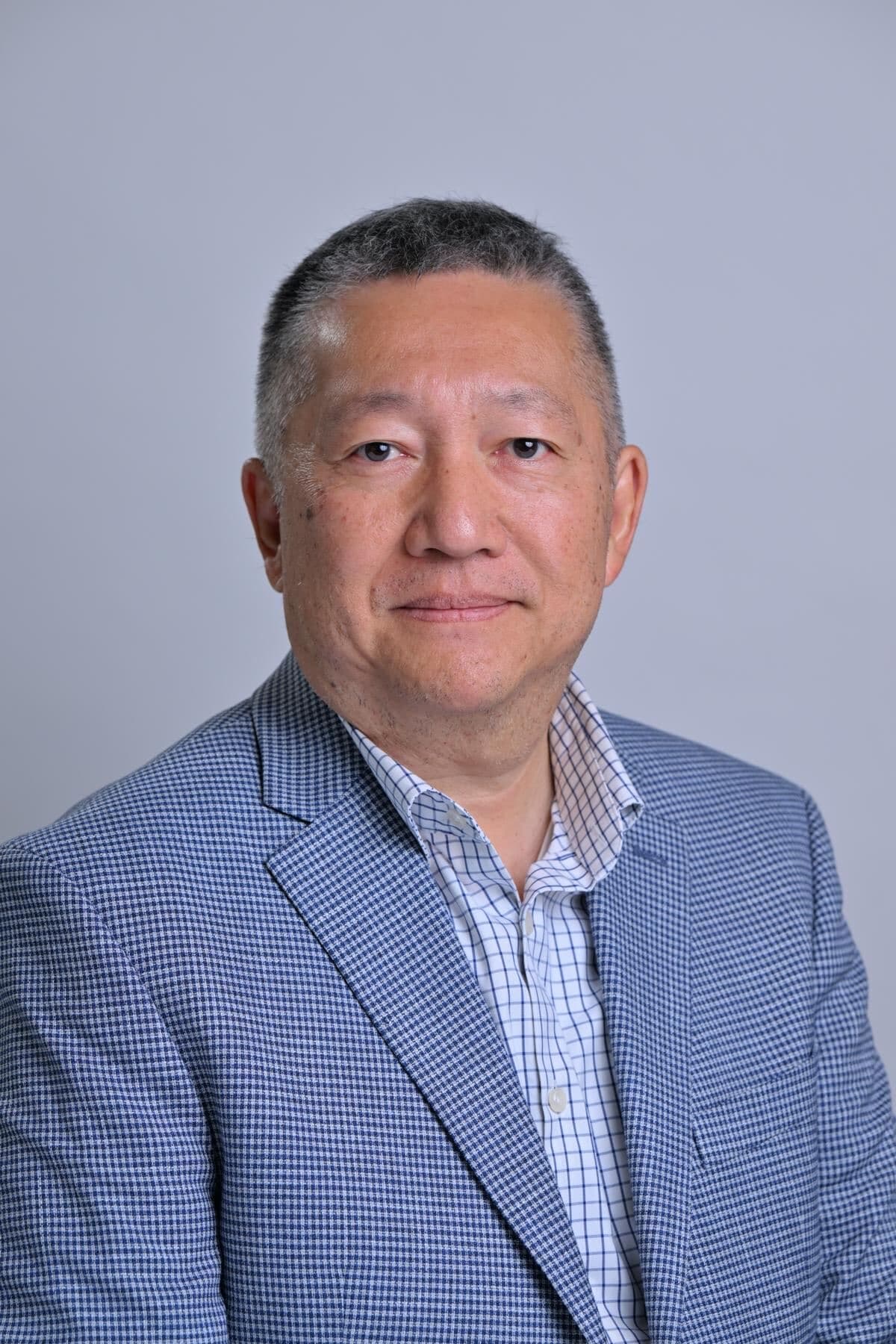
Founder & Principal
Credentials
- Former CISO, City of Los Angeles
- Founding CISO, Port of Los Angeles
- Founder, LA Cyber Lab
- StateScoop LocalSmart — Local IT Leader of the Year, Cybersecurity
- CISSP · PMP
- Former DHS SECRET clearance
Timothy Lee has spent nearly two decades protecting some of the most complex public environments in the United States. He founded YUZANA to close the gap between the promise of security technology and the reality of operational defense — and because the leaders he most wanted to help were the ones no consultancy was actually speaking to as peers.
“Security is not about the absence of threats. It is the presence of resilience.”
Defense at scale
His approach is defined by operational reality rather than framework fluency. Before leading citywide strategy, he established the cybersecurity program at the Port of Los Angeles, designing and implementing the nation's first maritime Cyber Security Operations Center to protect the busiest container port in the Western Hemisphere.
He later served as Chief Information Security Officer for the City of Los Angeles, where he built the City's Critical Infrastructure Protection program — securing the digital and physical lifelines of America's second-largest city across more than 40 departments. He directed the award-winning Integrated Security Operations Center, a command hub processing over one billion security events daily, and carried the executive and Council-facing case that kept it funded.
Collaborative intelligence
He founded the LA Cyber Lab, the nation's first city-led public-private partnership, to change how government and business share threat intelligence — building the governance structure and trust framework that made it work, not just the concept. A frequent speaker on governance and crisis leadership, he has been recognized with the StateScoop LocalSmart award as Local IT Leader of the Year for Cybersecurity.
Now
Through YUZANA, he advises public-sector and critical-infrastructure security leaders on strategy, operational architecture, and readiness — currently including an active executive advisory engagement with a major municipal law enforcement agency. His recent work has centered on cyber coordination, operational readiness, and executive decision-making during high-consequence incidents and major events, across the run of global events Los Angeles is hosting through 2028.
Navigate with confidence.
YUZANA works with a limited number of organizations at a time to keep the work principal-led. There is no sales pitch and no discovery gauntlet — just a direct conversation about your environment and what has to hold.
Security has become a board-level or council-level concern, and the questions coming down are ones the current reporting cannot answer.
Mission continuity matters more than compliance theater — and the gap between the two has started to show.
Leadership is ready to confront the ground truth of the environment rather than the version in the last assessment.
A fixed date is coming — an event, an audit, a go-live — and the readiness window is closing.
Prefer to skip the form
Timothy reads every submission personally and replies within two business days. Nothing you write here is added to a mailing list.
“Independent advice. Principal-led judgment.”
If the stakes are high and the margin for error is small, the work begins with clarity.
Start a Conversation